

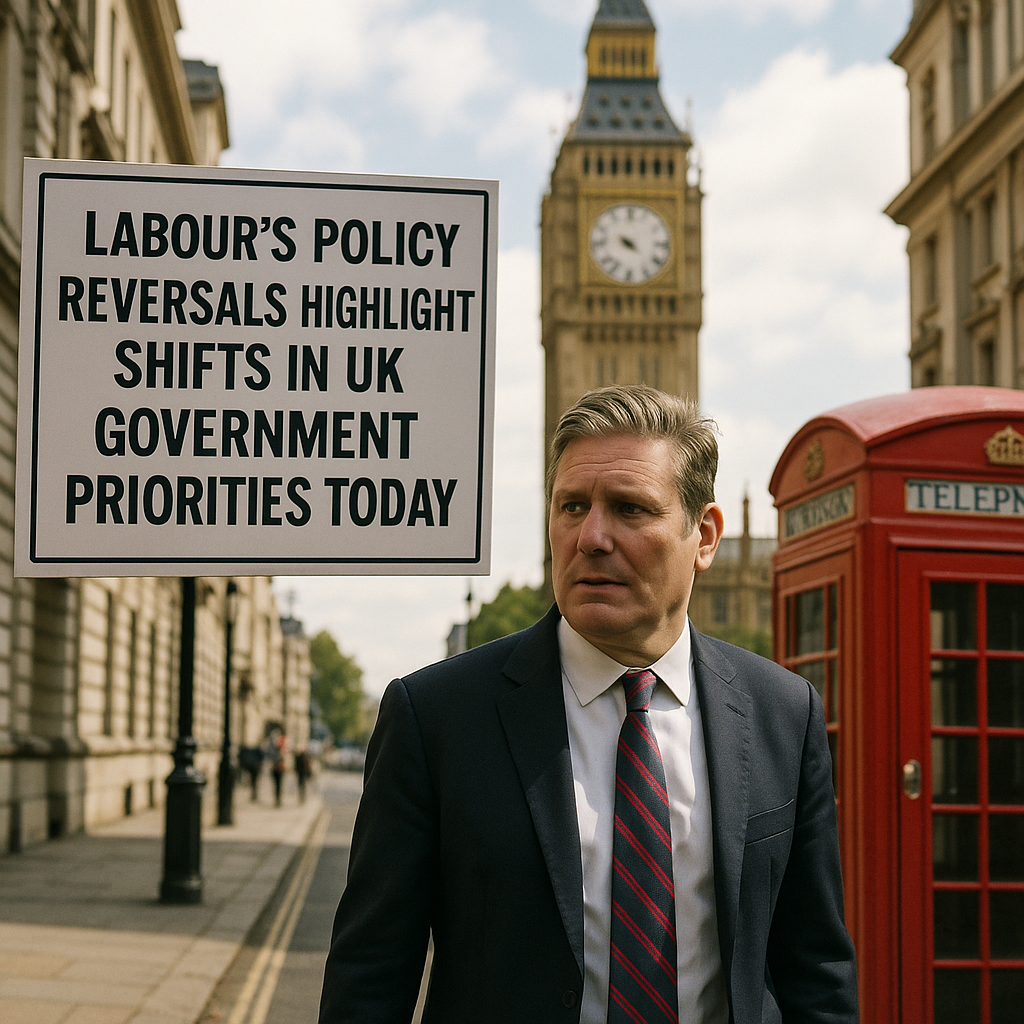
Since the Labour Party’s election victory, the political landscape of the United Kingdom has been marked by a series of notable policy reversals. From Westminster to the devolved nations, the new government’s shifting positions have stirred debate about the direction of UK politics and its broader implications for public trust and governance.
After winning the general election, Labour entered office with promises of fiscal responsibility, economic reform, and social renewal. However, as the months progressed, several high-profile U-turns began to emerge — each one sparking fresh commentary across Britain’s political spectrum.
A closer look at Labour’s U-turns reveals a pattern shaped by competing pressures. While details differ across departments, a central challenge emerges: balancing ambition with financial reality in a post-austerity economy. The government’s approach reflects both strategic recalibration and pragmatic constraint.
Among the reported reversals are changes in public spending commitments, where initial pledges for expanded funding in essential services were reduced amid concerns about borrowing levels and inflationary risks. Adjustments to energy policy followed suit, with previously announced green investment programmes scaled back due to fluctuating global energy prices and domestic budget limits.
Similarly, taxation strategies intended to enhance fairness have faced delays or revisions under pressure from business groups and middle-income earners. Promises surrounding housing and infrastructure development have also been moderated, as rising costs and planning challenges slowed progress on building projects across England and Wales.
Implications for the UK’s Future
These policy shifts highlight the complexity of governing a diverse nation where regional differences shape national policy. Decisions made in London reverberate through Scotland, Wales, and Northern Ireland, testing the government’s ability to maintain unity while delivering on its reform agenda.
Economically, Labour’s revised stance may represent an attempt to reassure investors and markets while sustaining essential social initiatives. Politically, however, frequent reversals can weaken public trust, leading many voters to question whether the government has a consistent long-term vision for Britain’s future.
The evolving dynamic also underscores how modern governance requires flexibility. Ministers must navigate fiscal constraints, international economic shifts, and public expectations — all while maintaining credibility. Each reversal may reflect not indecision but an ongoing adjustment to fast-changing realities.
Observers note that these developments could redefine how the Labour government approaches collaboration with regional administrations. In devolved contexts such as Scotland and Wales, maintaining cooperative frameworks will be essential to ensuring policy coherence across the UK.
The Wider Context of UK Governance
Governance in Britain today extends beyond Westminster’s corridors. Local identity, regional autonomy, and international reputation all play vital roles in shaping domestic decisions. Whether through London’s financial influence or Scotland’s ongoing debates over autonomy, every national decision carries implications that ripple across the union.
For readers seeking additional context on Labour’s evolving policy record and related analysis, the original article is available at Express.co.uk.
Ultimately, Labour’s sequence of U-turns illustrates both the opportunities and constraints of power. Governing a nation as complex as the United Kingdom demands constant negotiation between ideals and feasibility — a process visible in every major policy adjustment to date.
Conclusion: Labour’s evolving record serves as a reminder that political leadership involves adaptation as much as conviction. Each reversal tells a story of how governments manage competing priorities while striving to maintain public confidence in uncertain times.
As Britain continues to navigate economic headwinds and social expectations, these developments will remain central to evaluating the government’s capacity for meaningful change.






Leave a Comment