

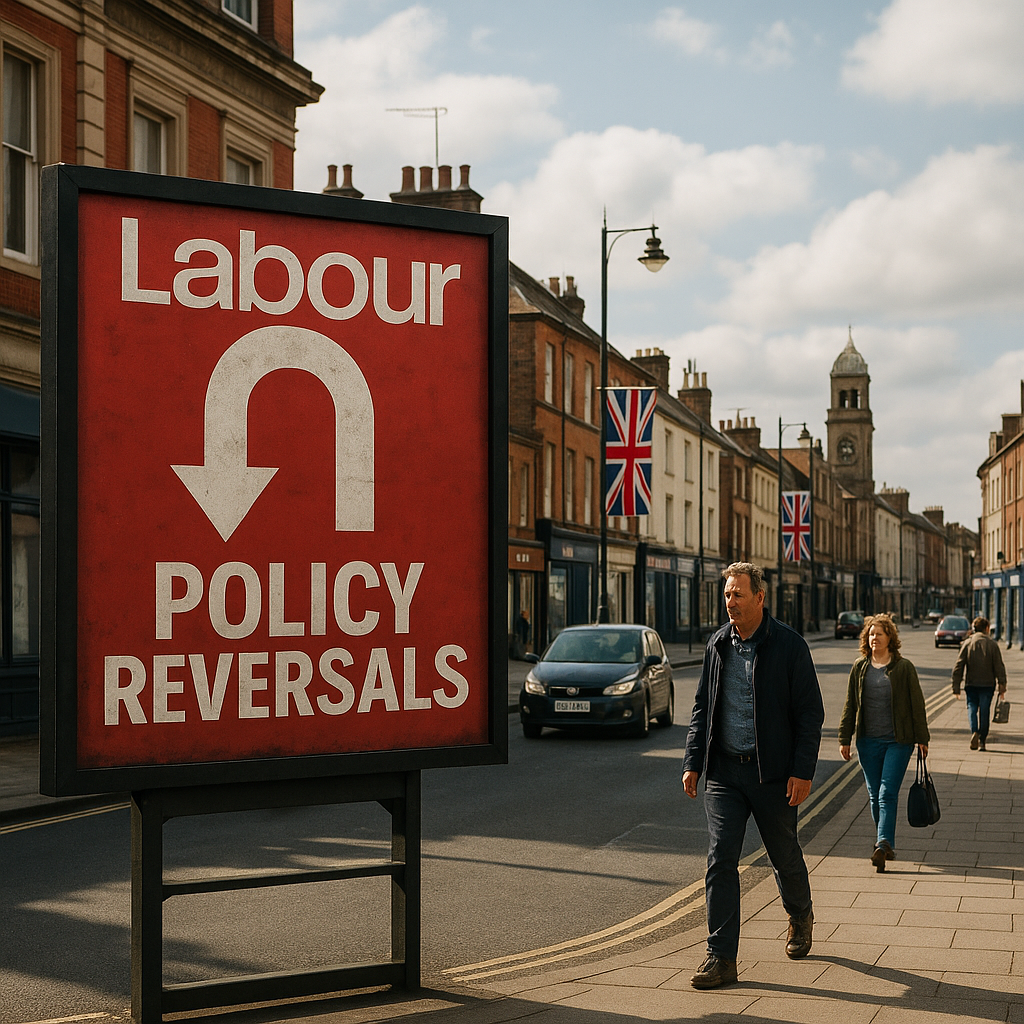
Since the Labour Party’s election victory, political observers across the United Kingdom have been closely watching a series of high-profile reversals that have shaped the new government’s image.
In Britain’s fast-moving political landscape, even a few months can dramatically shift priorities. The latest reports suggest that Labour’s governing approach has been marked by multiple policy changes and reconsiderations—moves that many describe as U-turns. While some see these as signs of adaptability, others view them as indications of uncertainty within the leadership.
A Pattern of Reassessment has emerged since Labour took office, with several key plans being reversed or modified. Among the most significant changes are those affecting finance, public services, and environmental policy. These shifts reflect a broader effort to balance fiscal responsibility with campaign promises.
UK finance and economic growth: Initial commitments to strict spending limits and tax measures have been reconsidered amid growing fiscal pressures. This recalibration aims to maintain investor confidence while sustaining public investment.
Public services: Adjustments in healthcare and education funding have sparked mixed reactions. Some welcome the flexibility to address immediate needs, while others worry that changing priorities could hinder long-term planning.
Shifting Priorities in Energy and Environment
Energy and environment: Labour’s evolving stance on net-zero targets and infrastructure projects underscores the complexity of pursuing sustainability alongside economic growth. The balancing act between green commitments and job security continues to define political debate.
Across England, Scotland, Wales, and Northern Ireland, these policy shifts have produced a spectrum of responses. Urban analysts often interpret Labour’s changes as pragmatic realism in a turbulent global economy, while some rural and regional communities express frustration over what they perceive as inconsistent governance.
The broader political climate in the UK remains dynamic. Governments frequently adapt their policies in response to shifting economic forecasts or international developments. In Labour’s case, many of its reversals stem from efforts to reassure markets and stabilize the economy after years of uncertainty.
With ongoing debates about the cost of living, public services, and global trade, these reversals may represent strategic recalibration rather than inconsistency. They reveal how leadership evolves under pressure and how priorities change when confronted with new realities.
Understanding Britain’s Political Climate
The United Kingdom’s political environment is rarely static. From Westminster’s corridors to local community gatherings across England and Wales, politics remains embedded in everyday life. For visitors and observers alike, this period provides a window into how modern governance operates under scrutiny and constant public dialogue.
For a detailed overview of Labour’s recent policy changes, visit the original report at Express.co.uk.
As Britain moves forward, these decisions will continue to shape both domestic debate and international perceptions of UK politics. Whether seen as necessary corrections or signs of hesitation, they reflect the challenges of leading a diverse nation through uncertain times.
Final Thoughts: Labour’s journey in government illustrates the tension between ideals and realities—a reminder that adaptability can be both a strength and a source of controversy in modern politics.
The months ahead will test how effectively the party can balance ambition with pragmatism while maintaining public trust and global credibility.






Leave a Comment