

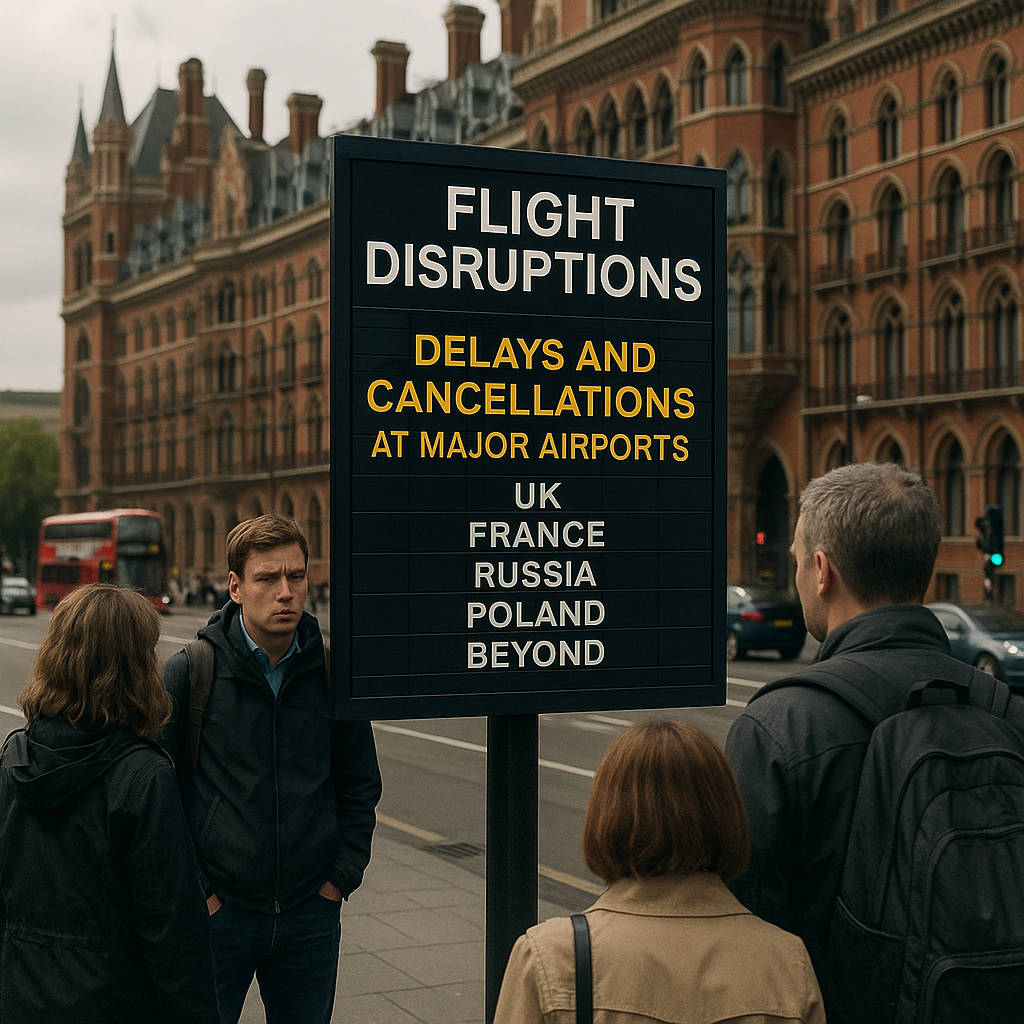
Major travel disruption has rippled across Europe this week, with the United Kingdom among the nations feeling the impact. Air passengers in and out of Britain have faced delays and cancellations after widespread issues affected airports across France, Russia, Poland, Finland and Turkey. According to reports, more than 1,400 flights were delayed and nearly 100 were cancelled at major international hubs including Paris Charles de Gaulle, Moscow’s Vnukovo and Sheremetyevo airports, St. Petersburg’s Pulkovo, and key terminals in London and Warsaw.
For travellers in the UK, the disruption has primarily affected routes connecting London with European cities. Carriers such as easyJet and KLM were among those hit by the delays, leaving passengers stranded or forced to rearrange their travel plans. With Britain serving as one of Europe’s most connected aviation centres, even minor disturbances elsewhere on the continent can quickly cascade into UK airports, amplifying queues and creating logistical challenges.
The ripple effect on the UK travel scene has been profound. The disruption comes at a particularly sensitive time for Britain’s travel industry, which continues to recover from post-pandemic pressures and fluctuating demand. The UK’s aviation sector — a vital part of its economy — remains highly susceptible to events beyond its borders.
Key implications include increased operational costs for airlines managing rerouted flights and overnight accommodations, passenger inconvenience due to rescheduling and missed connections, and economic knock-on effects for hospitality and tourism across England, Scotland, Wales and Northern Ireland as arrivals and departures are delayed.
As Britain navigates these challenges, the emphasis on infrastructure efficiency and better coordination between airlines and airports becomes even more critical to reduce the impact of future disruptions.
A Broader Perspective on European Air Connectivity
This latest incident highlights how interconnected European air travel has become. Britain’s position as a gateway between North America and mainland Europe means that operational issues abroad often affect UK timetables and business travel schedules. The consequences extend beyond immediate delays, influencing long-term planning for both leisure and corporate travellers.
As global markets remain volatile, such disruptions can even have subtle effects on UK finance, with transport delays influencing trade logistics and corporate mobility. While the cause of the mass delays has not been fully detailed, authorities across Europe are coordinating to restore normal operations and prevent extended interruptions. Travellers are being urged to check flight statuses frequently and allow additional time when travelling through major airports. More details about this ongoing situation can be found at Travel and Tour World.
This disruption underscores the necessity for enhanced coordination between air traffic control systems, airlines, and airport authorities across Europe. Improved communication channels and contingency planning could mitigate future disruptions and ensure smoother travel experiences for passengers.
For travellers, flexibility remains essential—keeping abreast of updates through airline notifications, rebooking policies, and real-time travel alerts can make a significant difference during such widespread delays.
Looking Ahead: Strengthening Resilience in UK Aviation
The recent turmoil serves as a wake-up call for the UK aviation sector to further invest in resilience strategies. These include adopting advanced digital systems for flight coordination, enhancing passenger communication tools, and ensuring rapid response frameworks when disruptions occur.
For the United Kingdom, this episode serves as a reminder of its deep integration with Europe’s transport network. Whether supporting business in London’s financial district or leisure trips exploring Britain’s cultural heritage, efficient travel links are vital for economic stability and connectivity.
As aviation infrastructure continues to evolve, maintaining operational stability during international disruptions will be key to preserving public confidence in air travel.
In conclusion, strengthening resilience within air transport systems will be crucial to ensure that the UK remains open, connected, and competitive on the global stage amid an increasingly interconnected travel environment.
Stay informed and plan ahead to make your journey as smooth as possible.






Leave a Comment